Orion finds an unexpected solution for an unusual project
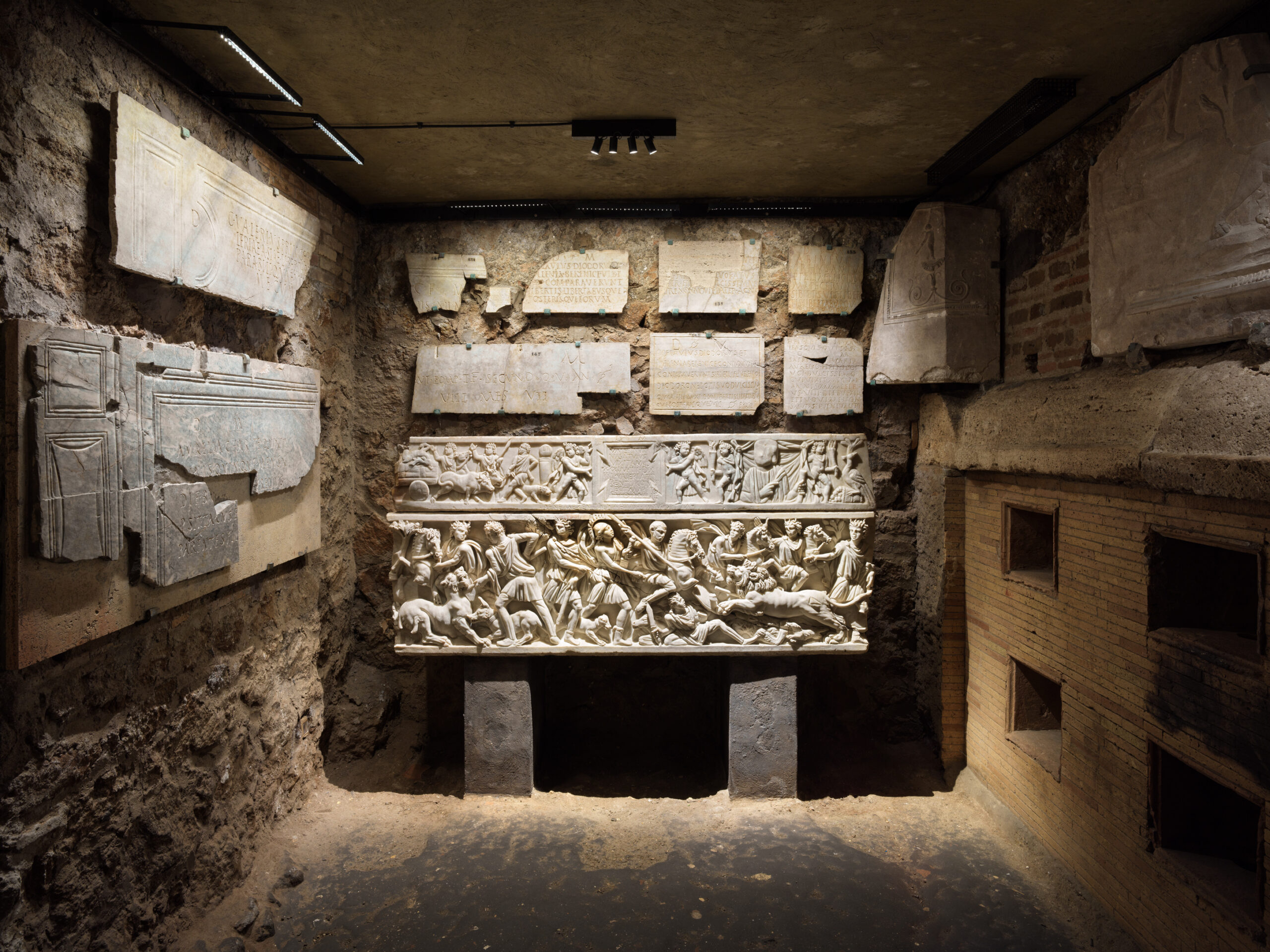
Five years ago, Orion received an email with an unusual request. It involved a project in one Christianity’s most sacred sites – the Necropolis beneath St. Peter’s Basilica at the Vatican in Rome.
According to Christian tradition, the Necropolis is the burial place of the apostle Peter, one of Jesus’ closest followers and a leading figure in the early Christian church. Catholic tradition considers Peter the first pope.
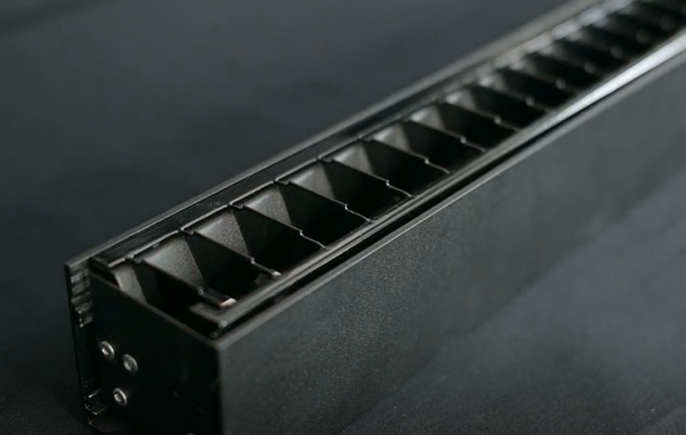
The email came from the lighting company OSRAM, which contacted Orion after visiting our Super Black Coatings website. The company was looking for a special coating for luminaires, or lighting fixtures, that help guide visitors from the brightly lit Basilica to the darker spaces of the Necropolis. One of the main challenges was minimizing unwanted reflections from the lights.
The email was forwarded to Dr. Kai Krauss, the senior technical market manager for Coatings at Orion.
Kai reached out to AkzoNobel and asked the coatings company if it wanted to collaborate on the project.
“I told them the project probably would not be big business for us, but I think it will be an interesting opportunity to learn and understand something and maybe in the end have a good story to tell,” he said.
AkzoNobel agreed to join Orion on the project.
The lighting company started sending parts of the luminaires, and Orion and AkzoNobel got to work on a solution.
“Initially, we thought we needed something that is not high jetness, that is lower jetness, so that the reflection would not be really visible for the visitor,” Kai said. “When you walk through the caves, your attention to the caves should not be distracted by the lights.”
But the team decided to challenge its initial assumption. Instead of using a lower-jetness carbon black, it tried a grade that produces the highest jetness possible
AkzoNobel produced the coating and applied it to a few of the luminaire parts.
It worked.
“It was proof that our high jetness grade is really the best when it comes to high jetness of powder coatings,” Kai said. “In principle, for this application, we would have thought exactly the opposite would be necessary. So given that, it was really a learning experience for us. Sometimes, you really have to think just the opposite to what you would expect will happen.”
By 2023, all the technical work was complete. But progress at the Vatican was slow. A new Pope was elected, and another lighting company, Zumtobel, took over the project.
The story finally became public in October when the Italian magazine Arketipo published a feature story about the renovated Necropolis that prominently mentioned Orion’s role. The project was also covered by Coatings World and Paint & Coatings Industry.
In the end, Kai’s original prediction was right. The project was not a big profitable business opportunity. But Orion learned something unexpected, strengthened its technical expertise and earned a place in a project at one of the world’s most historically significant religious sites.
And Orion ended up with a pretty good story to tell.
“I’m always keen to do such things because I think we can learn something,” Kai said, “We can gain some knowledge and it strengthens our reputation.”